On-machine AI fabric inspection
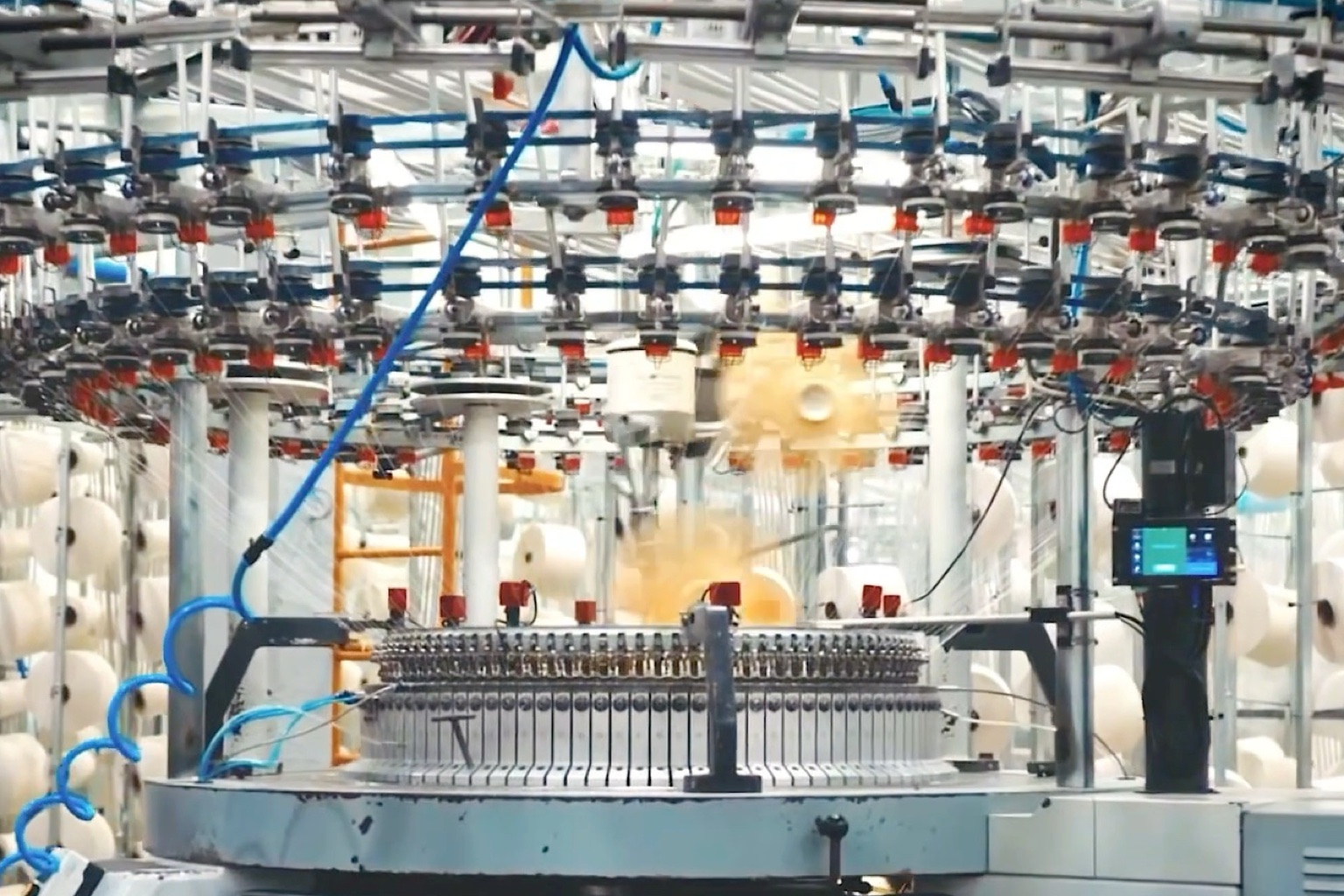
An industrial camera with its own lighting reads the fabric on the circular knitting machine, 24 hours a day. When a defect appears, the system sounds the alarm and stops the machine before the whole roll is lost.
The defect nobody sees costs the whole roll
With manual inspection, the fault usually shows up only at fabric inspection or dyeing, when the fabric has already been knitted.
Wasted fabric
Without detection during production, the machine keeps running with a broken needle or a yarn fault, and the fabric ends up as second quality.
Rejection by the customer
Defective rolls are turned down at dyeing and finishing, with returns, contract penalties and delays down the chain.
The limit of human attention
In continuous watching, attention drops after the first hours of a shift, and today’s machines run faster than the eye can follow.
One operator, many machines
Someone looking after several machines cannot watch them all at once. The automatic alert shows where to step in.
How it works
The system is installed on the machine itself and wired to its stop circuit.
- 1
Mounting on the machine
A bracket holds the camera about 10 cm from the fabric. The touchscreen monitor sits next to the machine.
- 2
Continuous reading
The camera reads the fabric on every turn, and AI image recognition compares what it sees with the fabric’s pattern. Automatic patrol, scheduled by roll or by production, and an out-of-focus camera alert keep readings reliable.
- 3
Alarm and stop
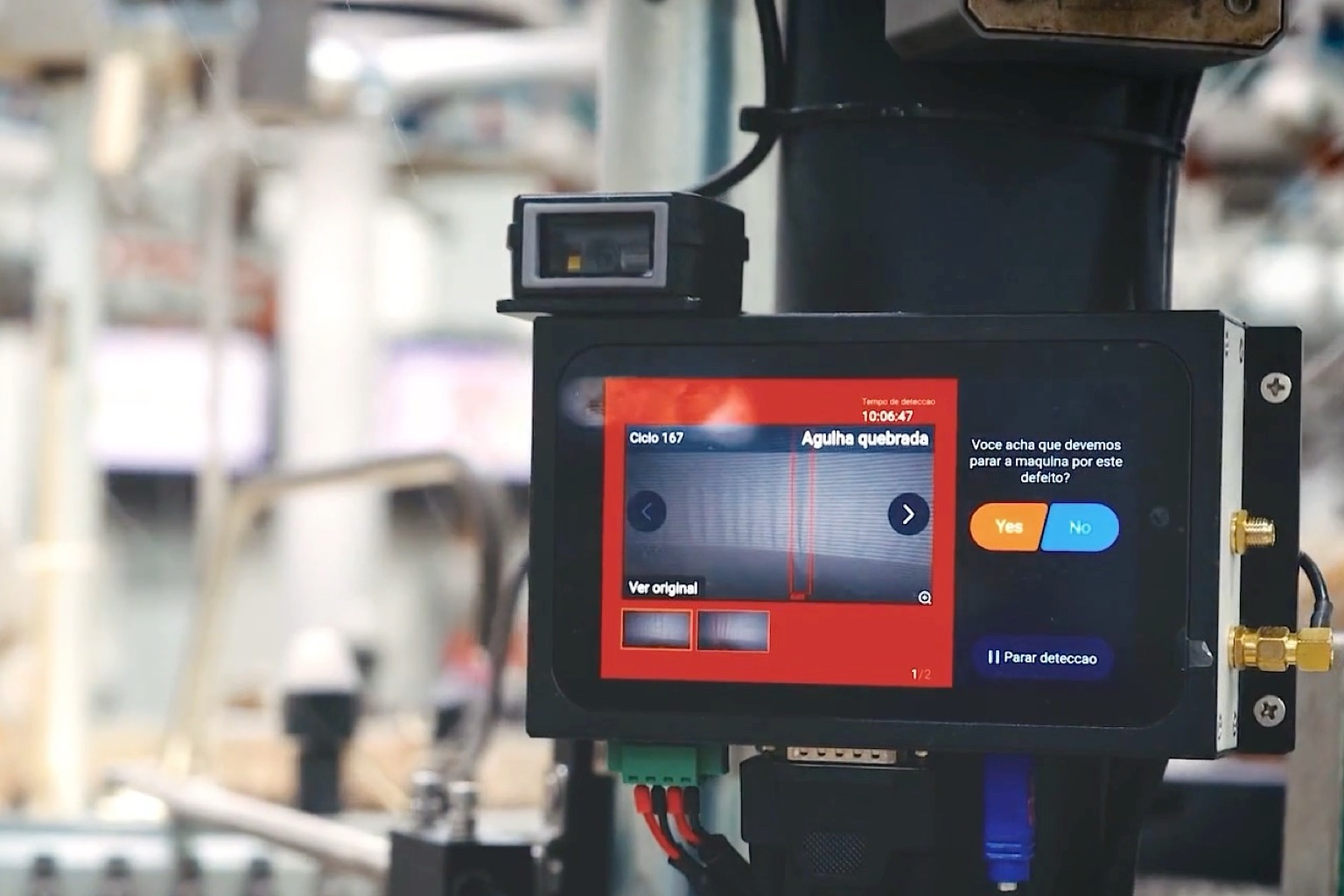
When it finds a defect, the system lights the alert lamp and stops the machine at once, before the fault repeats.
- 4
Logging and learning
Each event is logged by roll and by shift. The operator confirms or dismisses the alert, and the system learns from it.
What it detects
Sensitivity can be set to three levels, low, medium and high, or tuned for each type of fabric. Besides the defects below, it recognizes dropped stitches, stop marks, creases, snags, thick yarn and colored fiber.
Fabrics
Cotton knits
- Single jersey
- Fleece
- Light fleece
- Rib
- Piqué
- Interlock
Synthetic knits
- Viscose
- Polyester
- Polyamide
- Polypropylene
Single and double jersey
There is a device for each type of circular knitting machine.
Single jersey
For single jersey machines. A simple bracket fixed to the machine frame, with the camera facing the fabric.
Double jersey
For double jersey machines. A bracket made for that frame, with additional installation parts.
Production data
Everything the system detects goes to a web platform that the manager can follow from anywhere.
- Broken and loose needles
- Elastane faults
- Yarn faults
- Holes
- Stains, including oil stains
- Barré
Inspection report
Daily status of each machine, with the number of detections and the types of defect. Exports to a document for filing.
Comparison by machine and period
Filters by machine and by date to compare machines, shifts and weeks.
Defect map per roll
Shows on which turn and where in the fabric each defect appeared, so the cause is found faster.
Live view at the machine
On the monitor, the operator sees the fabric in real time and the shift’s defect count.
ERP integration
Inspection data flows into the mill’s management system, linked to the roll, the machine and the shift.
Quality certificate by QR code
Each roll can leave with a digital quality certificate that the buyer checks through a QR code.
Results in production
About 80%fewer defects in the fabric
Manufacturer’s data, measured at a knitting mill with 41 circular machines, on 22,527 kg of fabric before and 19,162 kg after installation.
What comes in the kit
Each machine gets a complete set, ready to install.
- Industrial camera with built-in LED lighting
- Touchscreen monitor, which is the main unit
- Mechanical bracket for single or double jersey
- 24 V power supply, with 100 to 500 V AC input, and cables
- Wi-Fi or 4G antenna connection
- Optional barcode reader to identify the roll
What would you pay with direct shipment?
Send the part number, drawing or a photo of the part. We reply with the source, the total cost and the route to your plant, with service dedicated to your operation.
Also in this industry.
- AI inspection on weaving loomsCameras and AI on the weaving loom itself detect the defect as it happens, sound the alarm and stop the loom before the fault runs down the roll.
- AI fabric inspection machinesInspection machines that check finished fabric with cameras and artificial intelligence, mark defects and produce the roll report.
- Automation and inspection for dyeing and finishingVision, measurement and control systems for stenters, dyeing and finishing: weft, weight, density, moisture, temperature, shade and bath.
- Circular knitting machinesCircular knitting machines: single and double jersey, jacquard and auto stripers, 3" to 64" in diameter.
- Needle break detectorA sensor that watches the needles of the knitting machine, stops it when a needle breaks or bends, and shows the exact position.
- Cylinders for circular knitting machinesNeedle cylinders for circular knitting machines, made to your machine's specification.
- Circular knitting machine spare partsSpare parts for circular knitting machines, to keep your mill running without waiting on the original maker.
- Knitting machine needlesNeedles for circular and flat knitting, socks and gloves. High-alloy steel with controlled heat treatment.
- Knitting machine sinkersSinkers for circular and seamless knitting machines, in certified high-alloy steel with a mirror finish.
- Industrial sewing needlesNeedles for industrial sewing machines: apparel, knits, embroidery, footwear, leather, bags and carpets.
- Vortex yarnVortex-spun yarn from Ne 10 to Ne 60 in cellulosics, polyester, blends and melange. Low hairiness and less pilling.
- Sizing agentsPowder agents for warp sizing, prepared with cold water only, with liquid auxiliaries that replace softeners, antistatics and waxes.
- Automated material handling and storageAGVs, autonomous mobile robots and automated storage systems to move and store materials between the stages of a textile plant.