Vortex yarn
We supply vortex yarn, made by air-jet spinning. The yarn comes out smooth, with few loose fibers, so knits and fabrics keep a better look after washing. Lines cover viscose, lyocell, modal, polyester, blends and melange, plus custom blends.
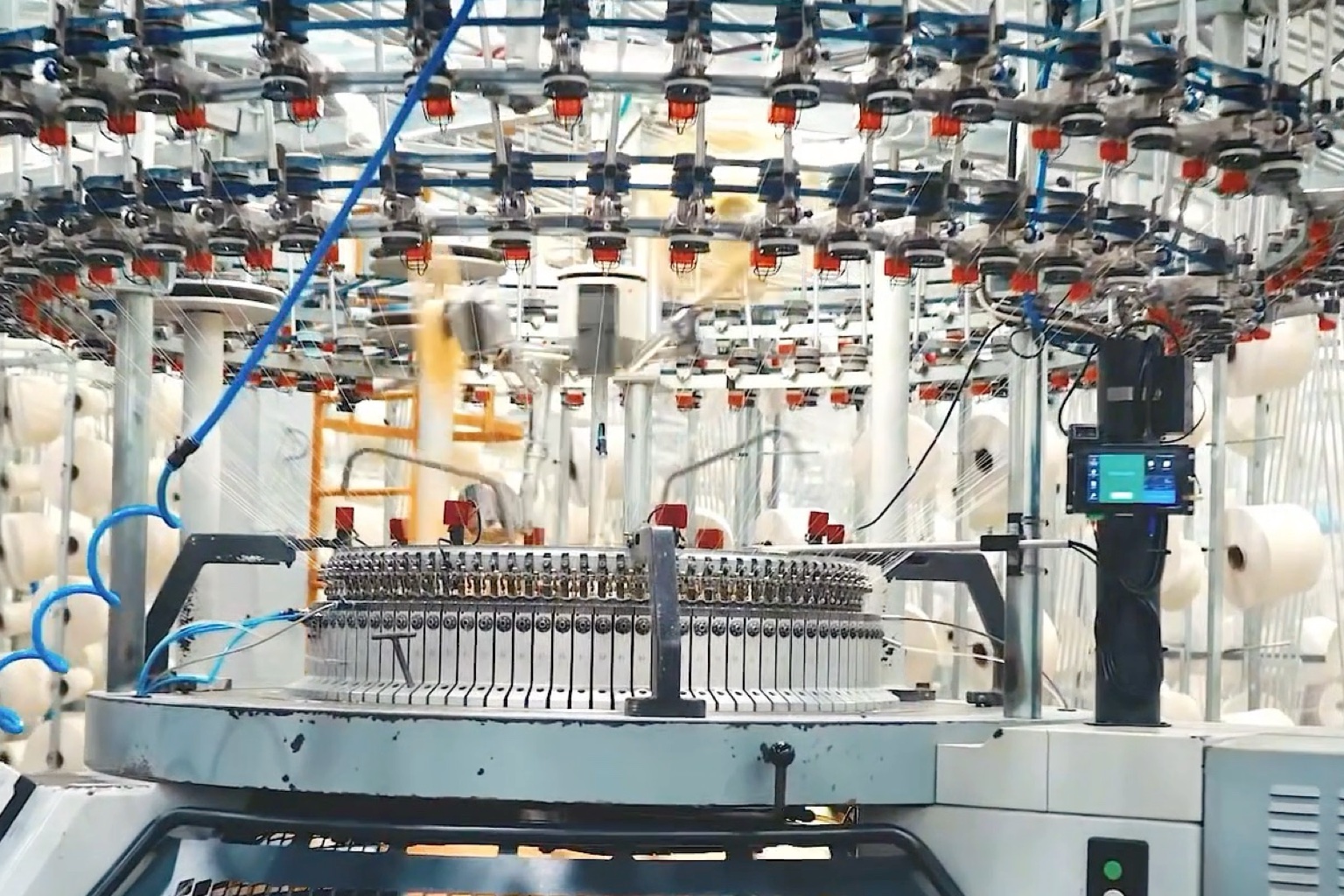
What vortex yarn brings to the fabric
The structure of vortex yarn changes how knits and fabrics behave in use.
Low hairiness
Fibers are wrapped around the yarn core, leaving fewer loose ends. The fabric surface looks cleaner.
Less pilling
With less loose fiber, the fabric forms fewer pills through wear and washing.
Abrasion resistance
The yarn holds up well to rubbing, which helps in garments worn hard and washed often.
Breathes and dries fast
Vortex yarn fabrics have good air permeability and dry quickly after taking up moisture.
Yarn lines
Available yarn families; other blends can be made to order.
- CellulosicsViscose, lyocell, modal and bamboo, pure or blended with each other, from Ne 10 to Ne 60.
- Polyester and blendsVirgin, recycled and cool-touch polyester, plus blends with viscose, lyocell, modal or bamboo.
- MelangeMelange yarns in viscose, polyester or acrylic, for knits with color effects built into the yarn.
- Cationic polyesterCationic-dyeable polyester, pure or blended with polyester and viscose, for two-tone effects.
- Cotton, flax and woolPolyester/cotton and CVC, viscose or lyocell with flax, and acrylic with wool.
- Core-spun and three-fiber blendsYarn with a viscose, nylon or PBT core, and three-fiber blends such as polyester, viscose and lyocell.
Specifications
- Process
- Vortex spinning, air-jet
- Count
- Ne 10 to Ne 60, depending on the family
- Fibers
- Viscose, lyocell, modal, bamboo, polyester, acrylic, cotton, flax, wool, nylon, PBT
- Composition
- 100% or blends in various ratios
- Made to order
- Blends and counts outside the standard range
Where it's used
- Circular knits for T-shirts and fashion
- Sportswear and leisurewear
- Uniforms and workwear
- Lightweight woven fabrics
- Bed, table and bath textiles
What would you pay with direct shipment?
Send the part number, drawing or a photo of the part. We reply with the source, the total cost and the route to your plant, with service dedicated to your operation.
Also in this industry.
- On-machine AI fabric inspectionAI fabric inspection on the circular knitting machine. It detects the defect and stops the machine on the spot.
- AI inspection on weaving loomsCameras and AI on the weaving loom itself detect the defect as it happens, sound the alarm and stop the loom before the fault runs down the roll.
- AI fabric inspection machinesInspection machines that check finished fabric with cameras and artificial intelligence, mark defects and produce the roll report.
- Automation and inspection for dyeing and finishingVision, measurement and control systems for stenters, dyeing and finishing: weft, weight, density, moisture, temperature, shade and bath.
- Circular knitting machinesCircular knitting machines: single and double jersey, jacquard and auto stripers, 3" to 64" in diameter.
- Needle break detectorA sensor that watches the needles of the knitting machine, stops it when a needle breaks or bends, and shows the exact position.
- Cylinders for circular knitting machinesNeedle cylinders for circular knitting machines, made to your machine's specification.
- Circular knitting machine spare partsSpare parts for circular knitting machines, to keep your mill running without waiting on the original maker.
- Knitting machine needlesNeedles for circular and flat knitting, socks and gloves. High-alloy steel with controlled heat treatment.
- Knitting machine sinkersSinkers for circular and seamless knitting machines, in certified high-alloy steel with a mirror finish.
- Industrial sewing needlesNeedles for industrial sewing machines: apparel, knits, embroidery, footwear, leather, bags and carpets.
- Sizing agentsPowder agents for warp sizing, prepared with cold water only, with liquid auxiliaries that replace softeners, antistatics and waxes.
- Automated material handling and storageAGVs, autonomous mobile robots and automated storage systems to move and store materials between the stages of a textile plant.